
Automatic Gate Openers in Quincy
We fit automatic openers to swing and sliding gates, repair openers that stall, hum or stop halfway, adjust safety sensors, and add automation to gates that are opened by hand today. An opener is only as good as the gate it moves, so the hinges or rollers, the posts and the gate’s balance are checked along with the motor.
The opener has to suit the gate: its weight and length, whether it swings or slides, and how often it runs. A busy shared entrance needs an operator built for frequent use; a family driveway does not. Power matters too: where it comes from, how the wiring reaches the gate, and whether the gate should still open in an outage.
Types of Gate Operator
| Operator type | Works with | Good to know |
|---|---|---|
| Articulated arm | Swing gates on wide or deep posts | A folding arm that copes with a hinge set back from the post face |
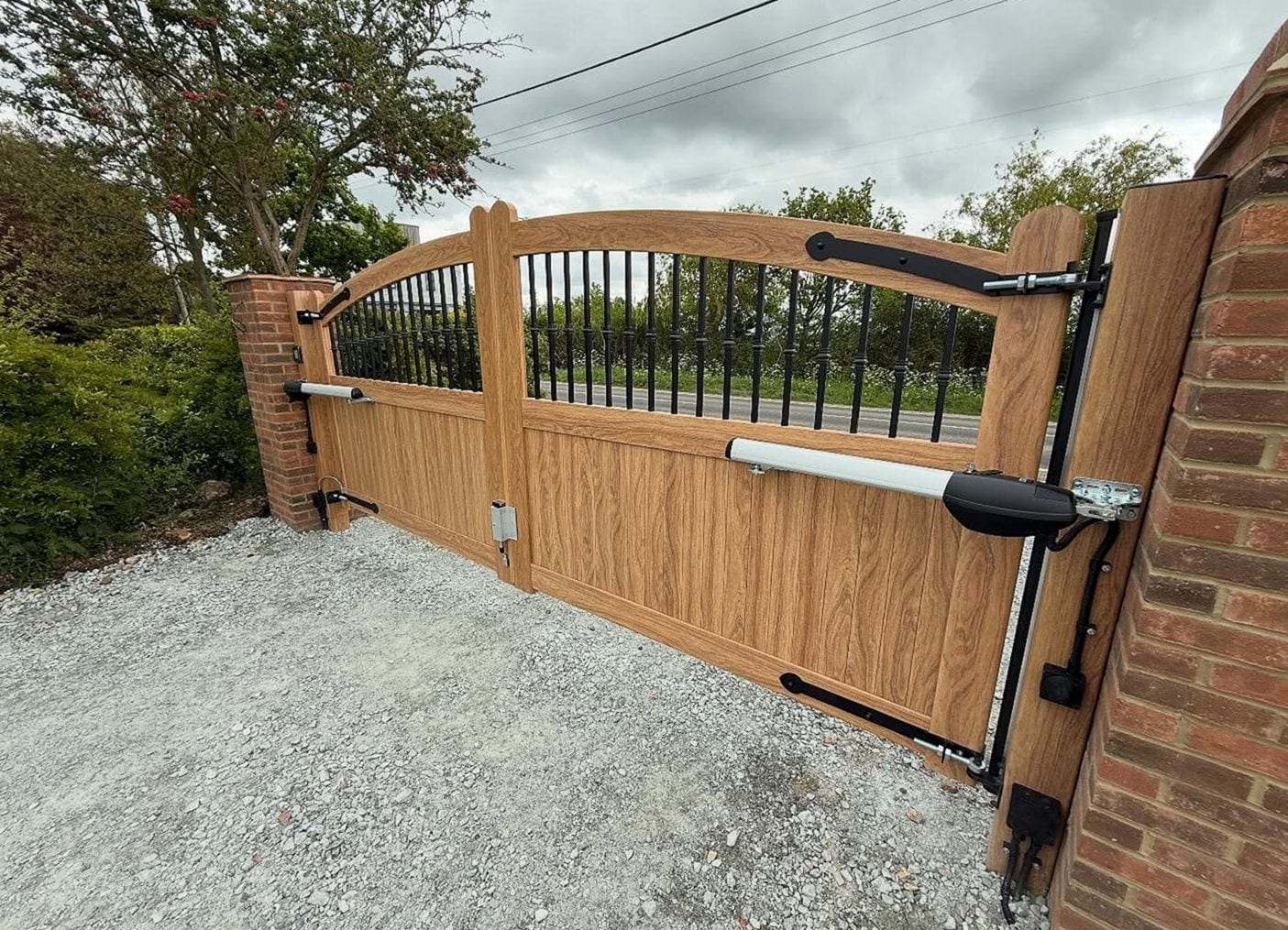
| Linear (screw or piston) arm | Swing gates with room on the inside of the post | Compact and tidy; needs the right setback between hinge and post |
| Underground operator | Swing gates where an arm would spoil the look | Hidden below the gate; the box must drain well in wet ground |
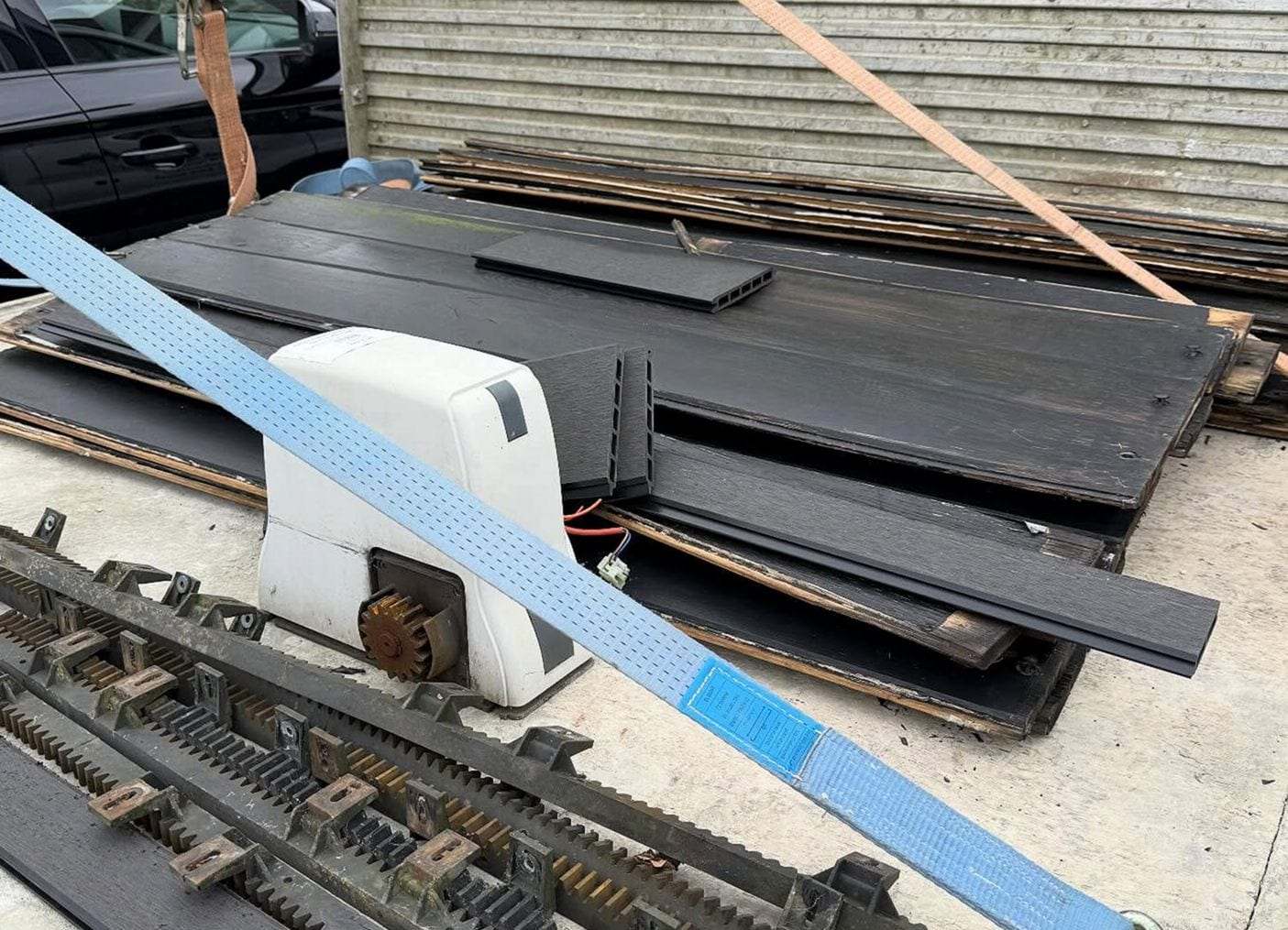
| Sliding gate operator | Sliding gates on a track | Drives a gear rack on the gate; the rack and track must stay clear |
| Battery backup | Most operator types | Keeps the gate running for a while when the power fails |
Questions about power, manual releases and opener noises are answered under openers and power.
Safety Features and Accessories to Ask About
Gate openers are built to the UL 325 standard, which requires protection against someone being trapped by a moving gate. When an opener is fitted or serviced, these are worth asking about:
- Photo eyes across the opening, which stop or reverse the gate if the beam is broken
- Edge sensors on the gate’s leading edge, which reverse it on contact
- Reversing and force settings, tested after any adjustment
- A manual release, and knowing where it is before you need it
- Remotes for each driver in the household
- A keypad or intercom at the driveway for visitors (see access control)
- Warning signs on both sides of an automatic gate
- Battery backup where the gate must work in an outage
When an Opener Acts Up
An opener that stops halfway and reverses is usually reacting to its sensors or to a gate that has become hard to move. One that hums without moving is getting power but cannot drive the gate. One that does nothing at all may have lost power or its controls. Winter adds its own causes: snow piled against a photo eye or ice in a sliding gate’s track will stop a gate that ran fine in October.
To have an opener looked at, call (857) 371-3783 or book an appointment.